The “norm” for a V6 is a 60° vee. The PRV runs 90° — not an engineer's whim, but the direct inheritance of the stillborn V8 it descends from. The story of an industrial decision that became the engine's signature.
In 1966, Peugeot and Renault — rivals everywhere else — signed an agreement to design common mechanical components. From this collaboration was born La Compagnie Française de Mécanique, founded in 1969 at Douvrin, near Lens, in the north of France — the name that would often designate the PRV engines themselves.
But the original ambition reached far higher. As early as 1966, Renault planned a grand French-style luxury saloon — Project H — designed to dethrone the Citroën DS. To power it, Peugeot and Renault jointly developed a 90° V8 of 3,550 cc fed by two twin-barrel carburettors. For a V8, 90° is the natural architecture: the angle that suits its crankshaft and its balance.
Deemed too costly for too uncertain a market, the saloon was abandoned as early as July 1967 — a single running example survives, kept by Renault Classic. Its V8, though, stayed on the table.
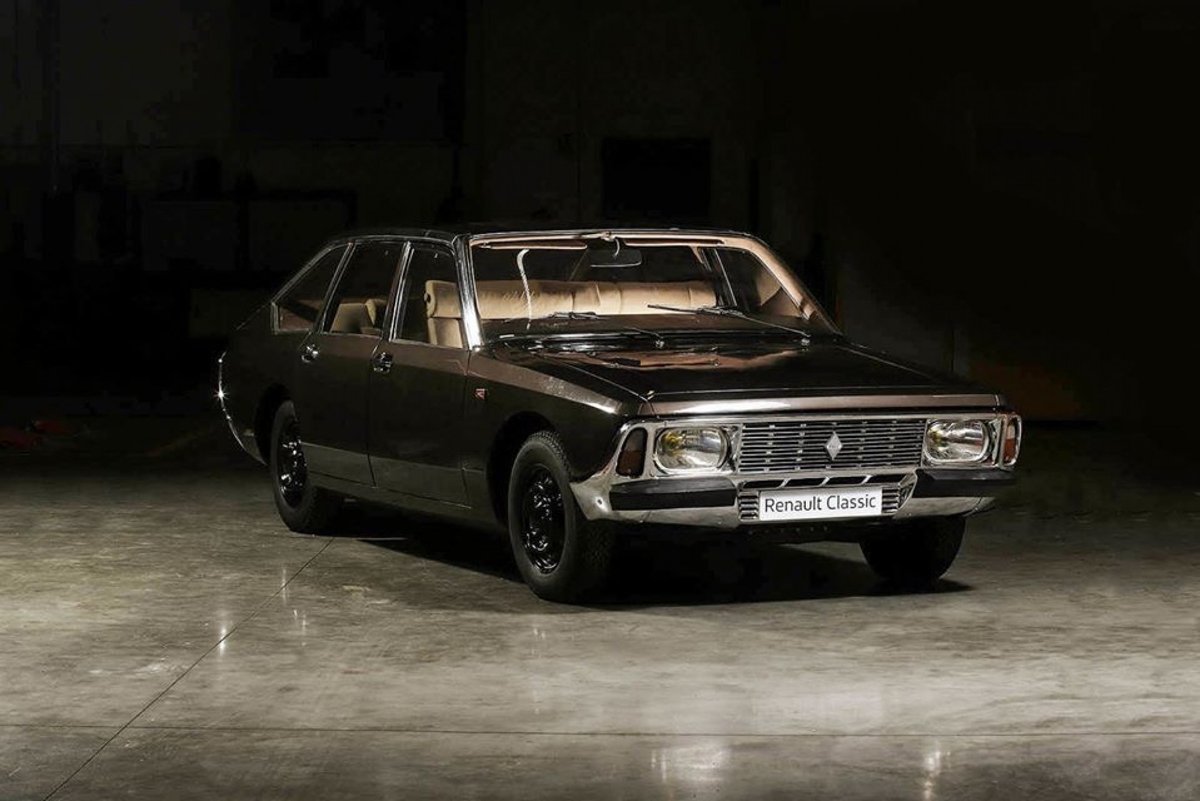
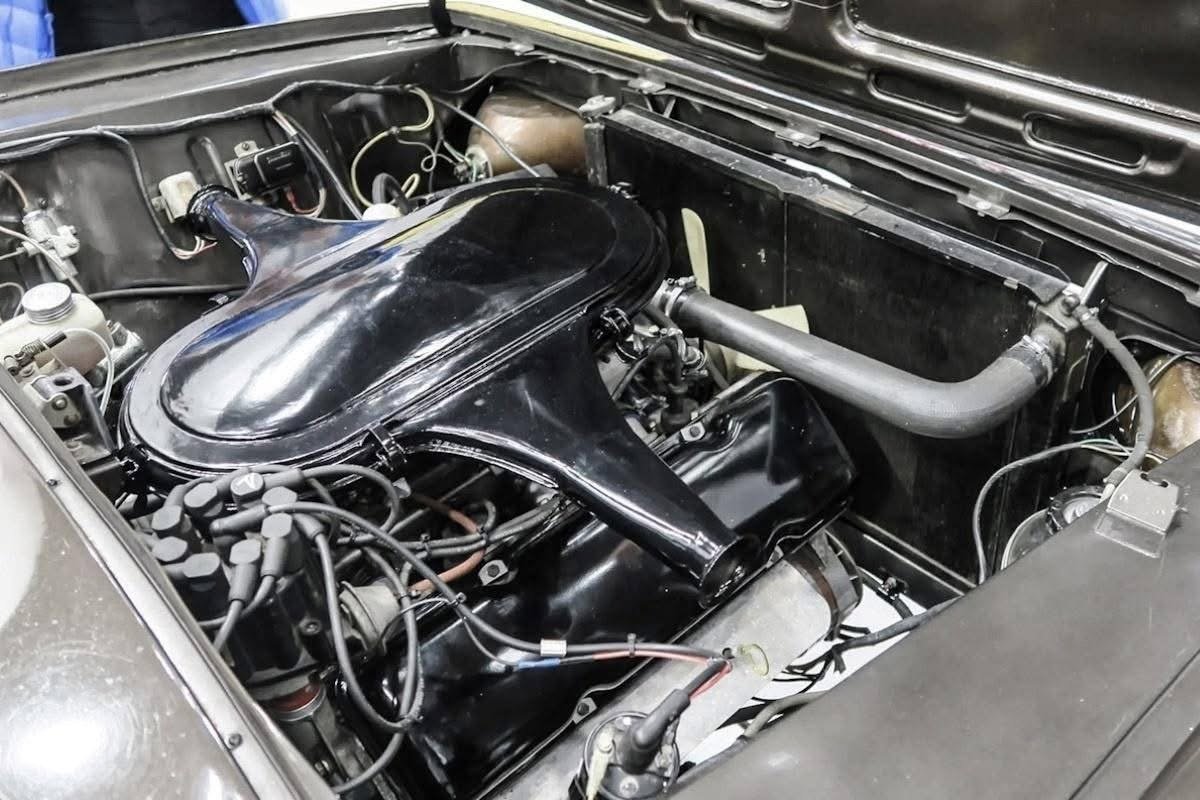
In 1971, Volvo joined Peugeot and Renault to create the PRV group, each of the three marques holding equal shares — P, R and V. And the Douvrin programme was designed as “modular” from the outset: V6s AND V8s built on the same line with a maximum of common parts, on a set schedule — the V6 for 1974, the V8 for 1976 — the whole family structured around the 90° architecture inherited from Project H.
ANIMATION — THE PRV V6 TECHNICAL PLATE SET IN MOTION BY ARTIFICIAL INTELLIGENCE.
Then comes the first oil crisis: a large, thirsty V8 becomes undesirable in an uncertain Europe, and the V8 half of the programme is suspended — it will never see the light of day. The V6 arrives alone, as planned: the V8 minus two cylinders — a quarter of its displacement — the first PRV, the 2,664 cc of the first generation. The studies, the tooling and the industrial investment of Douvrin are saved… and the 90° architecture with them.
That is the whole answer: the PRV is a 90° V6 because it was born a V8. At Douvrin the lines were assembled from summer 1973, everything was running by January 1974 — and in October 1974 the very first production PRV officially ran under the bonnet of a Volvo 264.
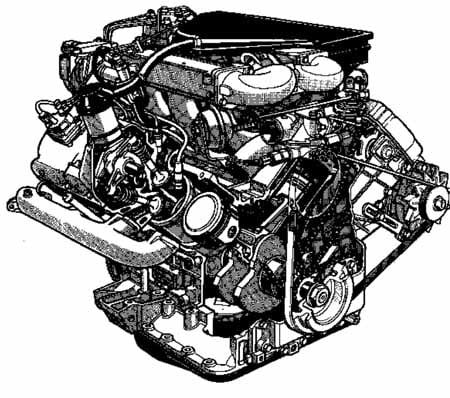
A 90° vee on a V6 has a cost: on the first generation, the crankshaft's non-split crankpins made the firing intervals alternate between 90° and 150° — the origin of the engine's early reputation for roughness. It was no oversight, but a deliberate economy: the cure — a split-crankpin crankshaft — required forged steel and far more complex machining, while the production crankshaft was itself cast rather than forged, as custom dictated. The second generation of 1985 fixed it with split crankpins, bringing even firing.
In exchange, the wide vee gives a lower, flatter engine that slips under low bonnets, leaves room between the banks, and gives the PRV a character all of its own — the one enthusiasts still cherish today, from the Renault 25 V6 Turbo to the DeLorean.
Article refined on 1 August 2026 following community feedback — thanks to Laurent C. for the nuance on the modular V6+V8 programme. Spotted something? The Contribute page is there for that.
From the 2.7-litre carburettor engines to the 3.0 24-valve twin-turbo of the record: the whole PRV story is on the site.