
910
BHP
Far from the saloons, the PRV V6 was pushed to the extreme on the track. Bi-turbocharged to inordinate outputs, it carried the WM team's obsession at Le Mans: to be the fastest in a straight line — and break 400 km/h.
Gérard Welter and Michel Meunier — two Peugeot designers — founded the WM team and lined up at Le Mans every year from 1976 to 1989, always powered by the PRV V6. Theirs was a singular goal: not to win overall, but to be the absolute fastest down the Mulsanne straight.
To get there, they boosted the Douvrin V6 with two turbos to outputs the road cars never dreamed of — pushing the same architecture from a few hundred to nearly a thousand horsepower.
Each year, a new car and a little more boost — the same PRV V6, turned ever closer to the edge in pursuit of the 400 km/h barrier.
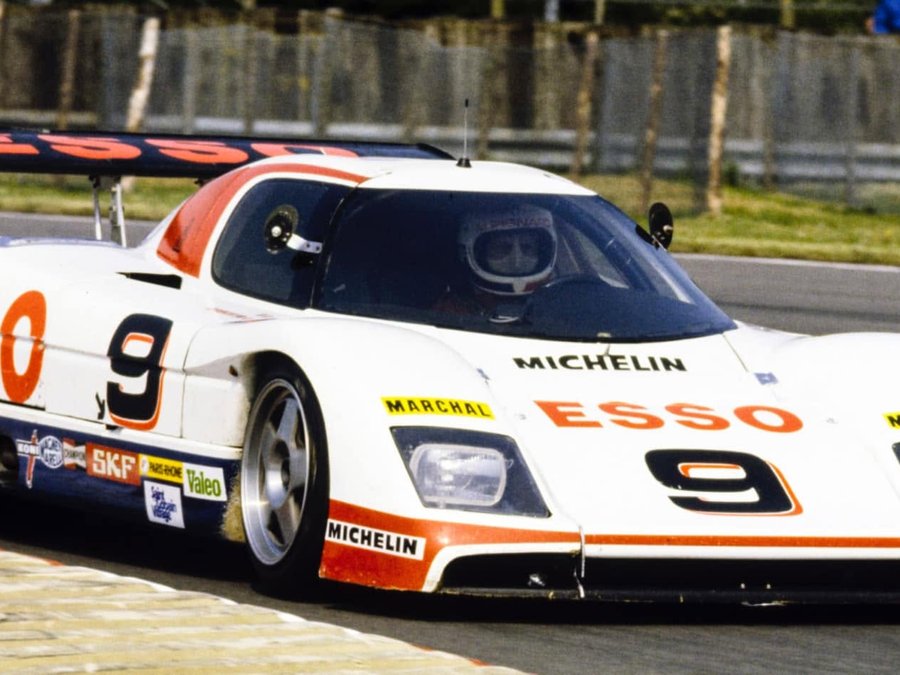 P82PHOTO TO COME
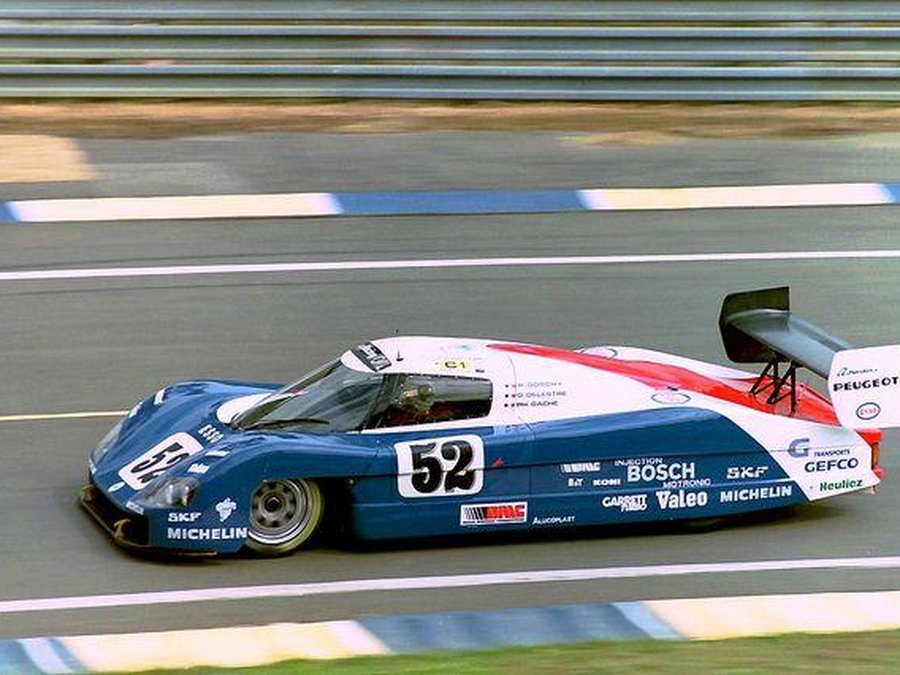 P87PHOTO TO COME
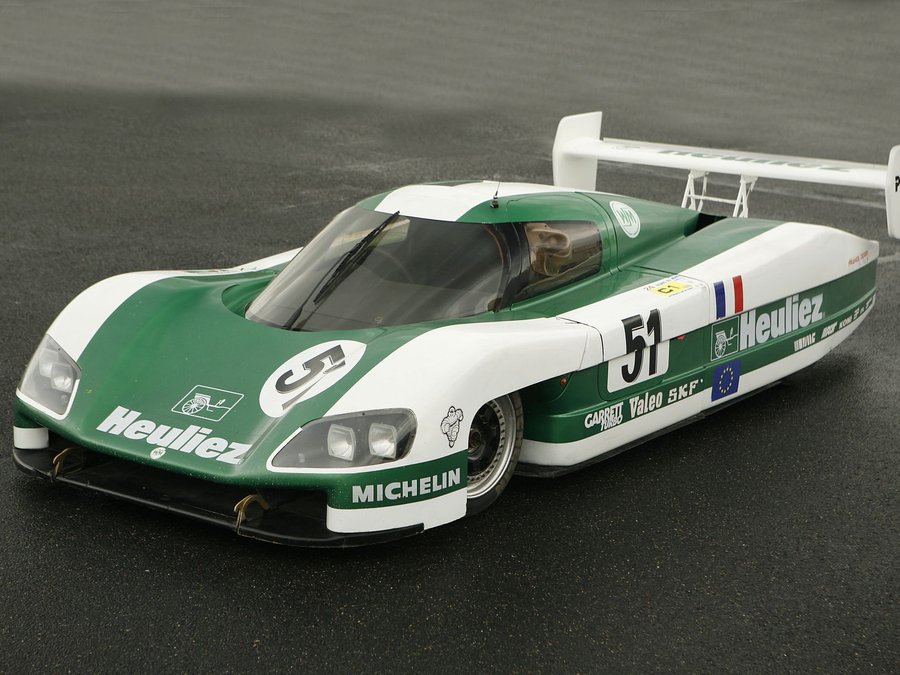 P88PHOTO TO COME
A curiosity: the 407 km/h was officially announced as 405 km/h, to coincide with the launch of the new Peugeot 405. The chicanes added to the Mulsanne straight in 1990 mean the record still stands today.
The full story in the Journal: “407 km/h in the Hunaudières” →
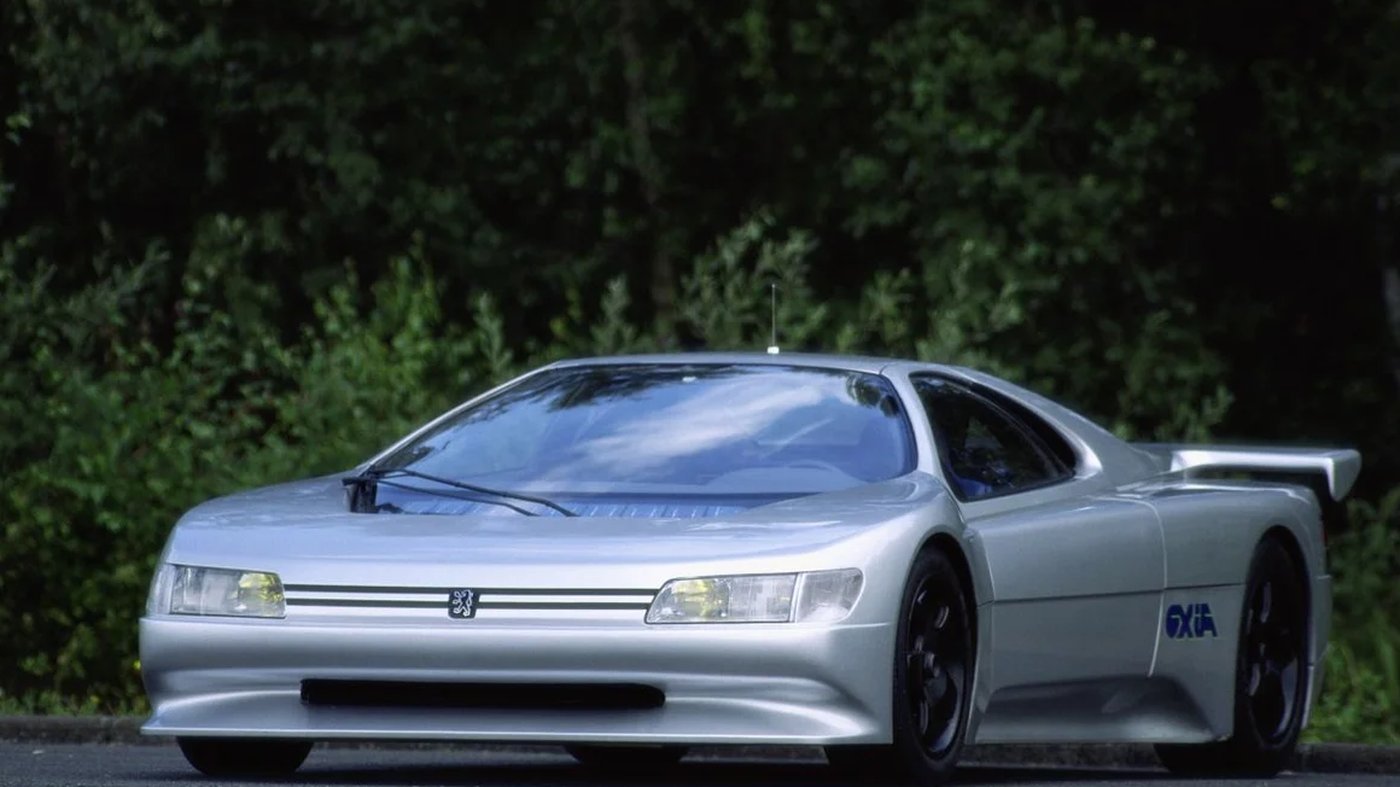
At the 1988 Paris Motor Show, Peugeot unveiled the Oxia — a mid-engined two-seater concept named after Oxia Palus, a region on Mars. Under its glass canopy, the lion brand crammed everything it could imagine for the year 2000: four-wheel drive, four-wheel steering, active aerodynamics, a solar-cell interior — and a PRV V6 tuned by WM, taking the same Douvrin block to outputs no road car had ever reached.
The 2,849 cc 24-valve PRV — twin-turbocharged with intercoolers — develops 680 bhp at 8,200 rpm and 726 Nm of torque. On a test track, Michelin driver Jean-Philippe Vittecocq pushes the Oxia to 350 km/h. A laboratory on four wheels — and proof that the PRV, beyond its saloons, was capable of carrying Peugeot into the realm of pure dream.
Oxia file →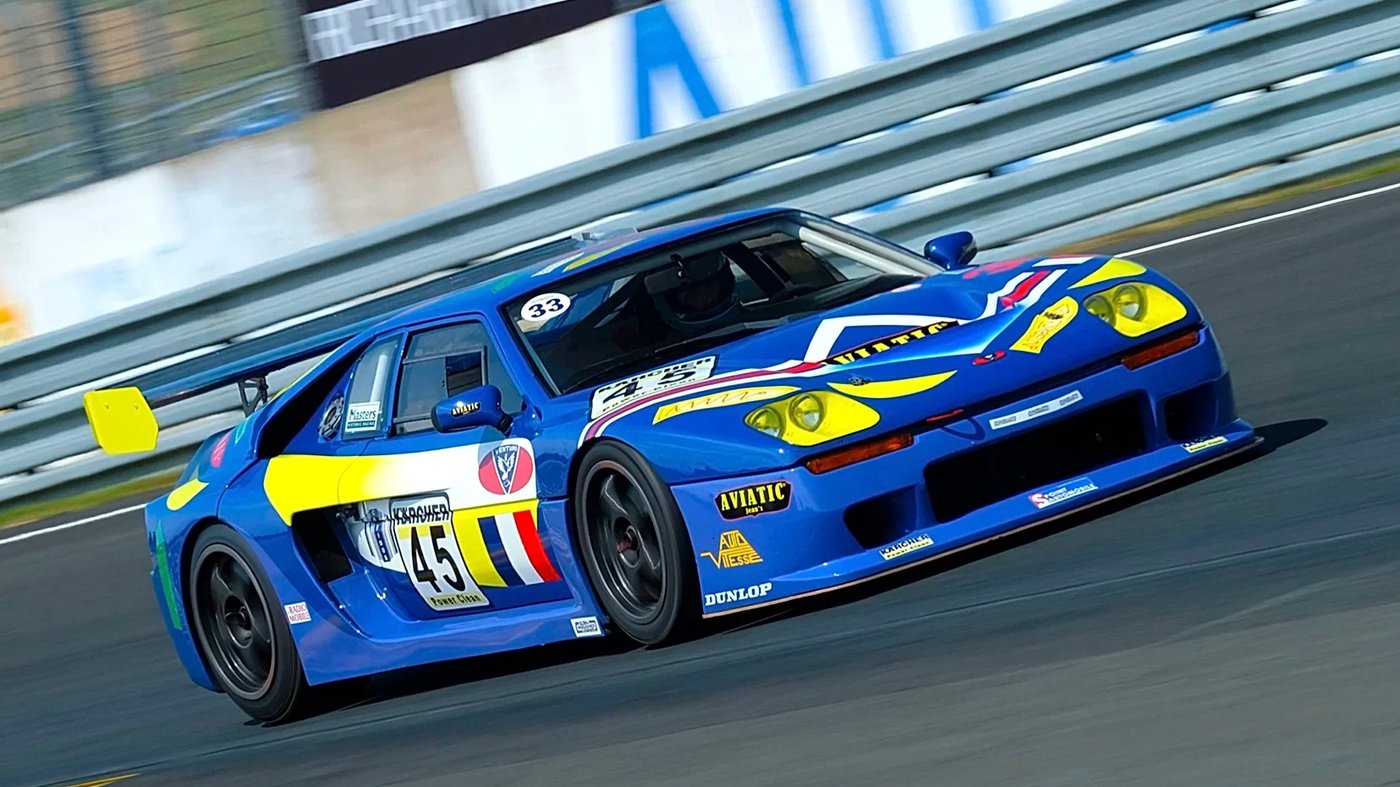
In the mid-1990s, Venturi took the PRV back to the track with the 600 LM — a competition version of the Atlantique built for the BPR series and Le Mans. Its 3.0-litre 24-valve PRV bi-turbo (EIA-developed) put out around 600 bhp, making it one of the most extreme road-derived applications of the Douvrin V6.
600 LM file →Beyond the lap times and records, the PRV V6 also left its mark on the big screen and the front pages — from the DeLorean of Back to the Future to the limousines of heads of state.